

Hello everyone Welcome or welcome back to Vasundhara Digital Agency. Are you curious to know what digital marketing is and how it works for small businesses, and are you getting confused about what digital marketing and the types of digital marketing are?
Digital marketing is the use of digital channels, platforms, and technology to market items or services to consumers. It helps business organizations to reach a larger audience in a cost-effective and measurable way.
Digital marketing refers to all marketing efforts that use digital platforms, such as the internet, social media, and mobile devices, to communicate with potential customers and promote products or services. It entails a variety of methods, including providing captivating content and running targeted adverts, as well as optimizing websites for search engines and engaging audiences on social media.
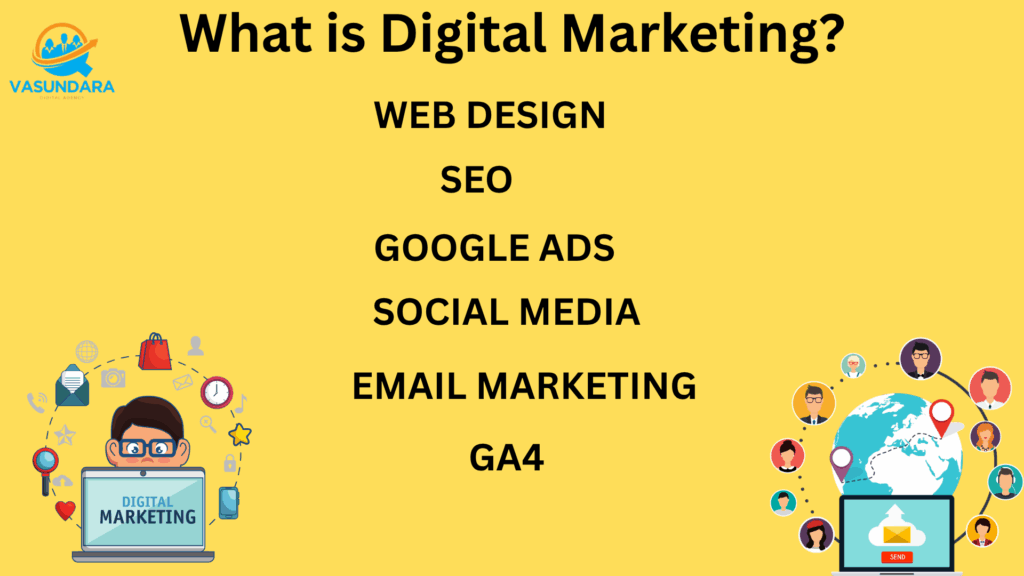
Digital marketing is the use of digital means to promote a product, service, or brand to a specific target audience.. It encompasses a variety of online methods, including search engine optimization (SEO), social media marketing, email marketing, content marketing, pay-per-click (PPC) advertising, and more. Unlike traditional marketing, digital marketing enables organizations to reach customers in real time, follow their behavior, and analyze results immediately. It is inexpensive, highly targeted, and adjustable to any business size, making it particularly useful for small and developing businesses. In today’s digital environment, it is critical for brand development, lead creation, and overall business success.
How digital marketing work
Digital marketing connects firms to their target audience using the internet and digital tools. It entails promoting items or services via online platforms such as websites, social media, search engines, emails, and mobile apps.
The goal is to attract people, engage them, and convert them into customers using well-planned techniques and content.
Identify the target audience.
First, organizations conduct research to identify and understand their ideal clients’ age, interests, geography, and online behavio
Select the Right Digital Channels.
Social Media (Facebook, Instagram, and YouTube)Email Marketing
Mobile applications
Create valuable content.
Businesses then develop useful and entertaining content, such as blog posts, videos, advertisements, or emails, to capture the audience’s interest.
Promote the content.
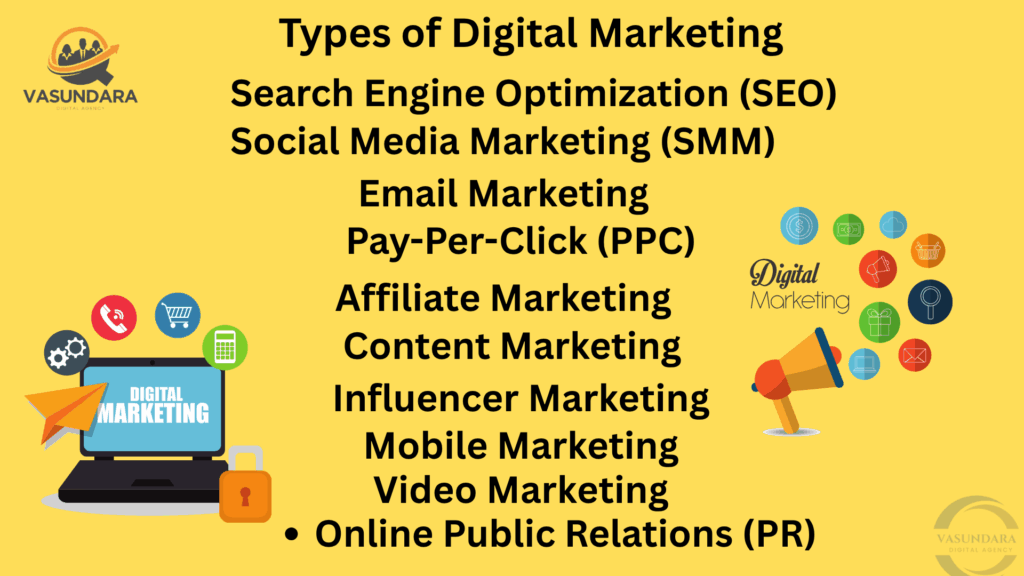
TYPES OF DIGITAL MARKETING
Search Engine Optimization (SEO)
Search Engine Optimization (SEO) refers to the process of increasing a website’s exposure on search engines such as Google, Bing, and Yahoo. The goal is to increase organic (non-paid) traffic to your website by ranking higher in search engine results pages (SERPs) for specified keywords.
Benefits of SEO-IN Digital marketing
Increases website traffic organically
Creates credibility and trust among users.
provides long-term results.
Improves the user experience.
Cost-effective when compared to paid advertising.
How SEO Works
Search engines rank pages using algorithms that consider relevancy, content quality, user experience, and authority. SEO is optimizing your website so that it complies with these ranking criteria.
Content Marketing
Creating and sharing useful content to attract and engage a target audience.
information marketing is a strategic approach that focuses on developing and delivering valuable, relevant, and consistent information in order to attract and maintain a specific audience — and, eventually, drive profitable consumer action.
Instead of directly promoting items or services, you provide useful and informative content that solves problems, fosters trust, and cultivates relationships.
🔧 Helpful Tools
SEO: Ahrefs, SEMrush, and Google Keyword Planner.
Content planning tools include Trello, Notion, and CoSchedule.
Design: Canva, Adobe Express.
Email Marketing: Mailchimp and ConvertKit
Analytics: Google Analytics, HubSpot, and Hotjar.
Social Media Marketing (SMM)
Using Facebook, Instagram, LinkedIn, and Twitter to promote your brand.
Social media marketing is the process of advertising a brand, product, or service through social media platforms like
Twitter (X)
TikTok
YouTube
Pay Per Click:
Pay Per Click (PPC) is a digital marketing technique in which advertisers are charged a fee every time their ad is clicked. Instead of getting organic traffic, you pay for it through advertisements.
How PPC works:
You build advertisements and publish them on platforms such as Google Ads, Bing Ads, and social media (Facebook, Instagram, LinkedIn).
When someone clicks on your ad, you receive a modest payment.
The idea is to generate targeted traffic for your website or landing page.
Common PPC Platforms:
Google Ads (Search and Display Network)
Bing Ads
Facebook Ads
Instagram Ads
LinkedIn Ads
Email Marketing
Email marketing is a digital marketing technique that entails sending emails to a specific set of people (typically customers or prospects) to promote items, communicate news, establish connections, or give relevant material.
What is Email Marketing used for?
Promoting goods or services
Announce deals, discounts, or events.
Share newsletters or updates.
Developing leads and fostering repeat business.
Developing brand loyalty and engagement.
Key components of Email Marketing:
Email List: A collection of email addresses from people who are interested in your business.
Campaign: A single email or series of emails delivered to your list.
Content: The message, which may be commercial, instructive, or informative.
Call to Action (CTA): What action you want the receiver to take (purchase, join up, read more, etc.).
Benefits of Email Marketing:
Cost-effective and great ROI.
Communicate directly with your audience
Personalization and segmentation possibilities for targeting certain groups
Easy to track performance (open rates, click rates, conversions)
Affiliate Marketing
Affiliate Marketing is a type of digital marketing where a business rewards individuals (called affiliates) for bringing in customers or traffic through the affiliate’s own marketing efforts.
How Affiliate Marketing Works:
A business creates an affiliate program. Affiliates sign up and receive a unique tracking link. Affiliates promote the business’s products or services using their link (via blogs, social media, YouTube, etc.). When someone clicks the link and makes a purchase (or completes a specific action), the affiliate earns a commission. Example:
For instance, as an affiliate for an online apparel retailer, you may write a product review on your blog and include your affiliate link. If someone buys via your link, you get a share of the sale.
Influencer marketing
Influencer marketing is a sort of social media marketing that includes endorsements and product placements from influencers—people who have a large social following and are regarded as experts in their field. These influencers might range from celebrities to regular people who have established a strong personal brand and internet presence.
Key Elements of Influencer Marketing:
Influencer Selection: Choosing the appropriate influencer is critical. Brands often look for individuals whose audience is similar to their target market and who have high interaction rates.
material Collaboration: Influencers create real and engaging material, such as posts, articles, videos, or reviews, about the brand or product.
Platform Selection: Instagram, TikTok, YouTube, and newer platforms like LinkedIn and Threads are popular avenues for influencer marketing.
Campaign objectives may include brand awareness, improved sales, internet traffic, or consumer interaction.
Measurement and ROI: Success is measured using measures such as reach, engagement, conversions, and return on investment.
Mobile Marketing
Mobile marketing is a digital marketing approach that targets consumers’ smartphones, tablets, and other mobile devices via websites, email, SMS, applications, and social media. With mobile usage surpassing desktop globally, it has become an essential component of any effective marketing plan.
Key Components of Mobile Marketing:
Mobile-Friendly Websites: Designed for smaller displays, with quick loading times and simple navigation.
Mobile applications: Businesses frequently create applications to improve the user experience, permit direct contact, and increase client loyalty.
SMS and MMS marketing involves sending promotional texts or multimedia messages directly to users’ phones.
Push Notifications: App-generated alerts that encourage users to take action.
Ads presented within mobile apps are typically extremely targeted and interactive.
Location-Based Marketing: Uses GPS data to provide users location-specific messaging or offers.
QR Codes are scannable codes that take users directly to content or promotions on their mobile devices.
Video Marketing
Video marketing is the use of video material to promote a brand, product, or service across several digital channels. It’s one of the most engaging types of content marketing, used to raise brand awareness, drive traffic, enhance interaction, and produce leads or sales.
Conclusion:
We hope you have good knowledge about digital marketing. What is digital marketing, and how does it work? If you have any recommendations, please share them in the comments area below. You may also share this post with relatives or friends who are looking for this purchasing website. We appreciate your time.
how digital marketing helps to grow your business
what digital marketing do
How to make money from digital marketing?
Do digital marketers work from home?
What is the salary of digital marketer online?
Is digital marketing a good side job?
What skills are required for digital marketing?
why digital marketing is important nowadays
What are 10 types of digital marketing?